Building a Crazy Taxi-inspired management game in the browser with React, Three.js, and Blender. One month of dev from first commit to playable demo.

The Idea
I wanted to make something that felt like Crazy Taxi meets an idle management sim. You're not driving the taxi — you're running the fleet. Pickups, dropoffs, rush hour chaos, all rendered in a little Blender city running in the browser.
The constraint: build it entirely with web tech. No Unity, no game engine. Just Next.js, React Three Fiber, and models from Blender.
Tech Stack
| Tech | Role |
|---|---|
| Next.js 15 | App framework |
| React Three Fiber | React renderer for Three.js |
| Three.js | 3D rendering |
| Blender | City modeling, path nodes, animation |
| TypeScript | Type safety across the whole project |
| gltfjsx | GLB → React component generation |
Phase 1: Foundation (Dec 28)
Started with the basics — a Three.js canvas, overhead camera, and a single taxi driving a loop around a procedural 8x8 grid of buildings.
The movement system was deterministic path-following from day one. No physics, no AI. Taxis interpolate between path nodes at constant speed using useFrame. Smooth rotation to face the movement direction. 60fps.
This was the right call. Physics would have been a nightmare for a game about timing, not driving.
Blender Integration (Dec 28)
Same day, I started pulling the city out of code and into Blender. The procedural grid was fine for testing but I wanted a handcrafted city.
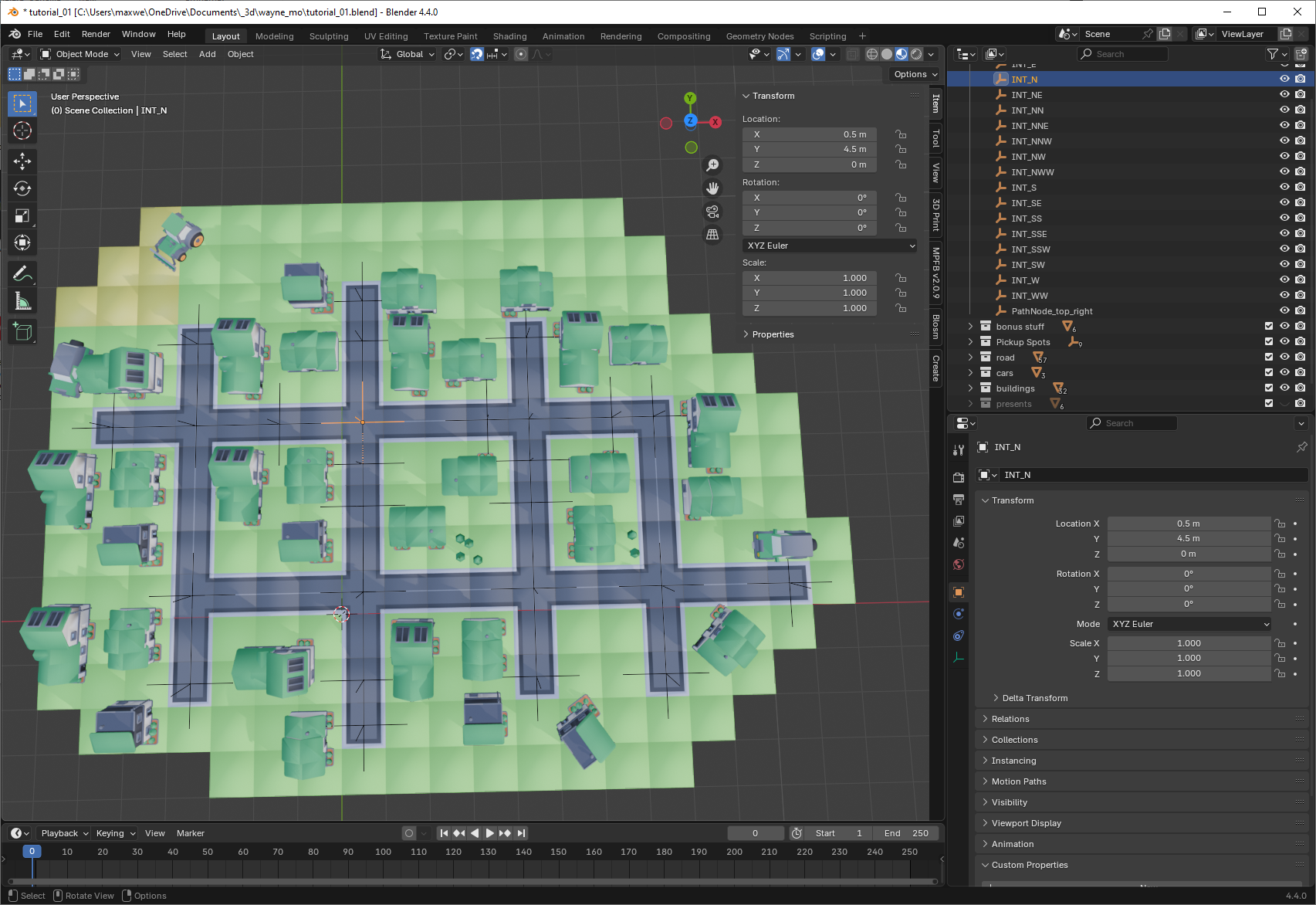
The pipeline:
- Model the city in Blender with path node markers (tiny spheres)
- Name nodes with a type system:
PathNode_001,INT_001,PathNode_PickUp - Define connections via Blender custom properties
- Export as
.glb - Run
gltfjsxto generate typed React components - Extract path nodes at runtime and build the road network dynamically
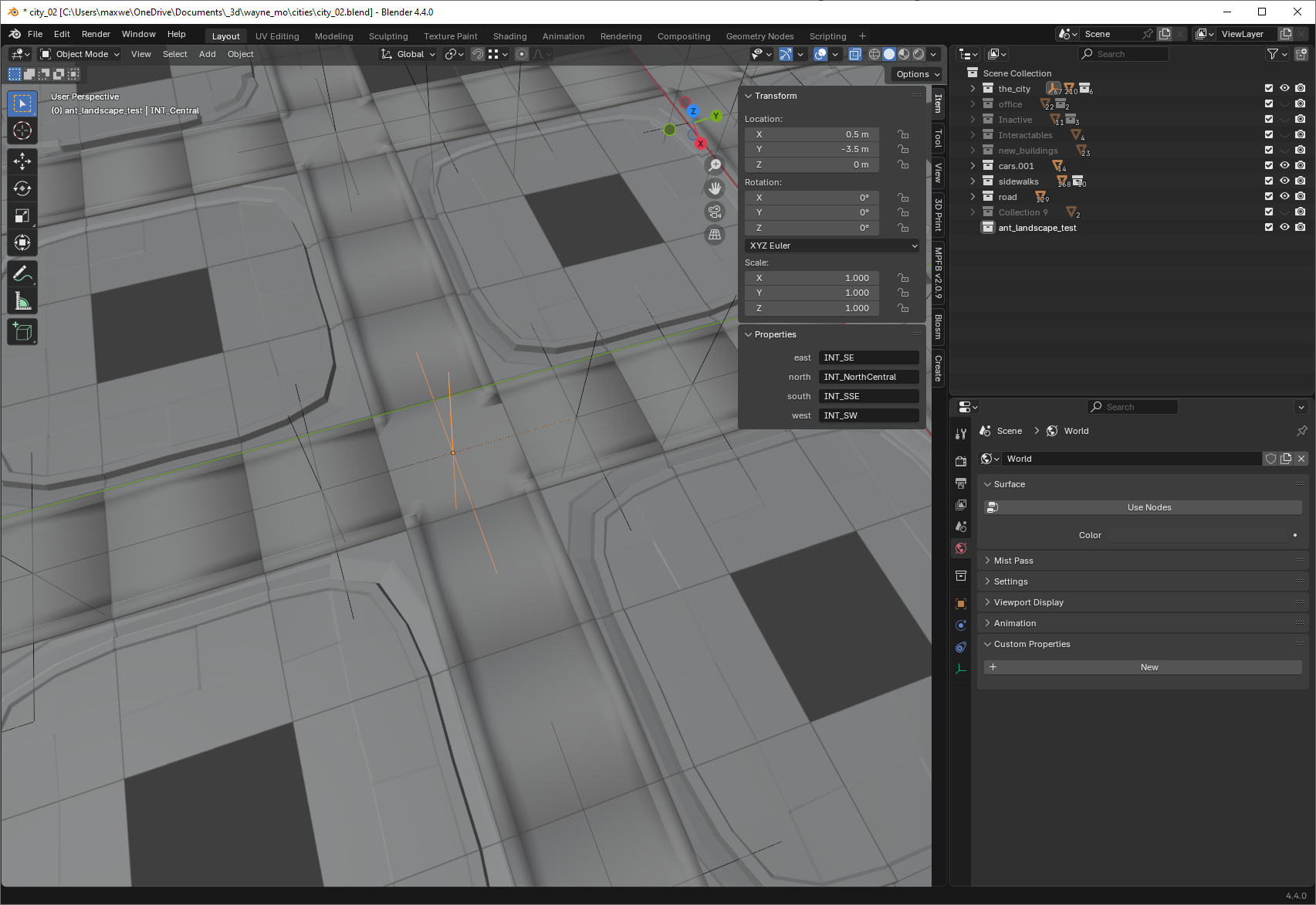
This Blender-driven workflow meant I could redesign the entire city without touching code. Move a node in Blender, re-export, road network updates automatically.
Delivery System (Dec 30)
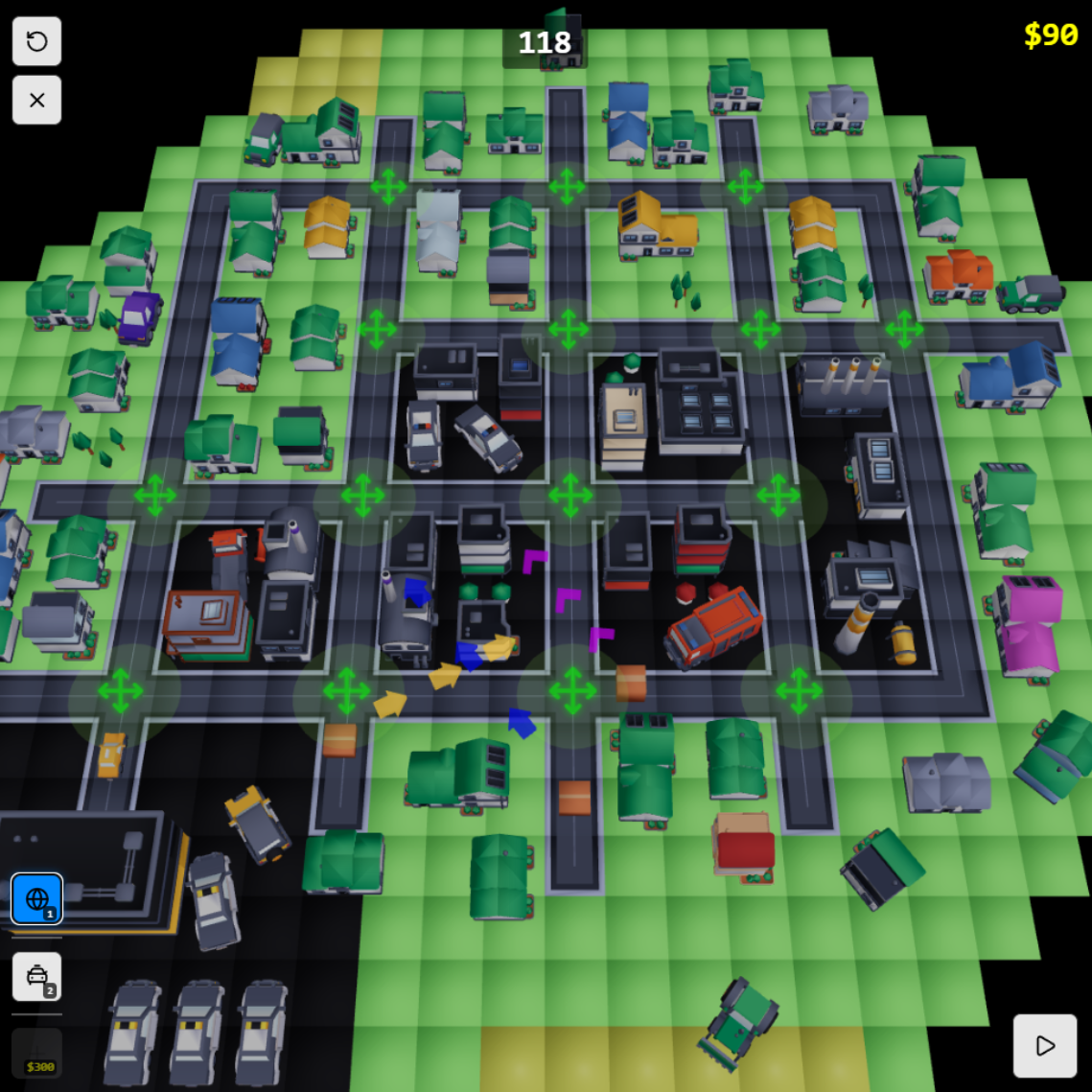
Got the core gameplay loop working in a single day. Color-coded pickups and dropoffs — match the colors, deliver the package, get paid.
- One package at a time (enforced)
- Unique colors per active delivery
- Score display with running total
- Visual indicators for pickup/dropoff locations
Then stacked on top: taxi spawning, collision system, game timer, taxi cost system, game over modal. Also added Rush Hour — a timed chaos mode where everything speeds up and deliveries pay more.
The Big Push (Jan 5-6)
This was the sprint. Over two days:
- Massive dev push — got everything into "working game" state
- Mobile styling overhaul
- Component reorganization
- Full CSS Module refactor (moved everything out of inline styles)
- Camera keyboard controls + better indicators
- Score multiplier system with distance-based tiers (1x-4x)
- Directional arrow indicators pointing to deliveries
- Box models replacing the placeholder presents
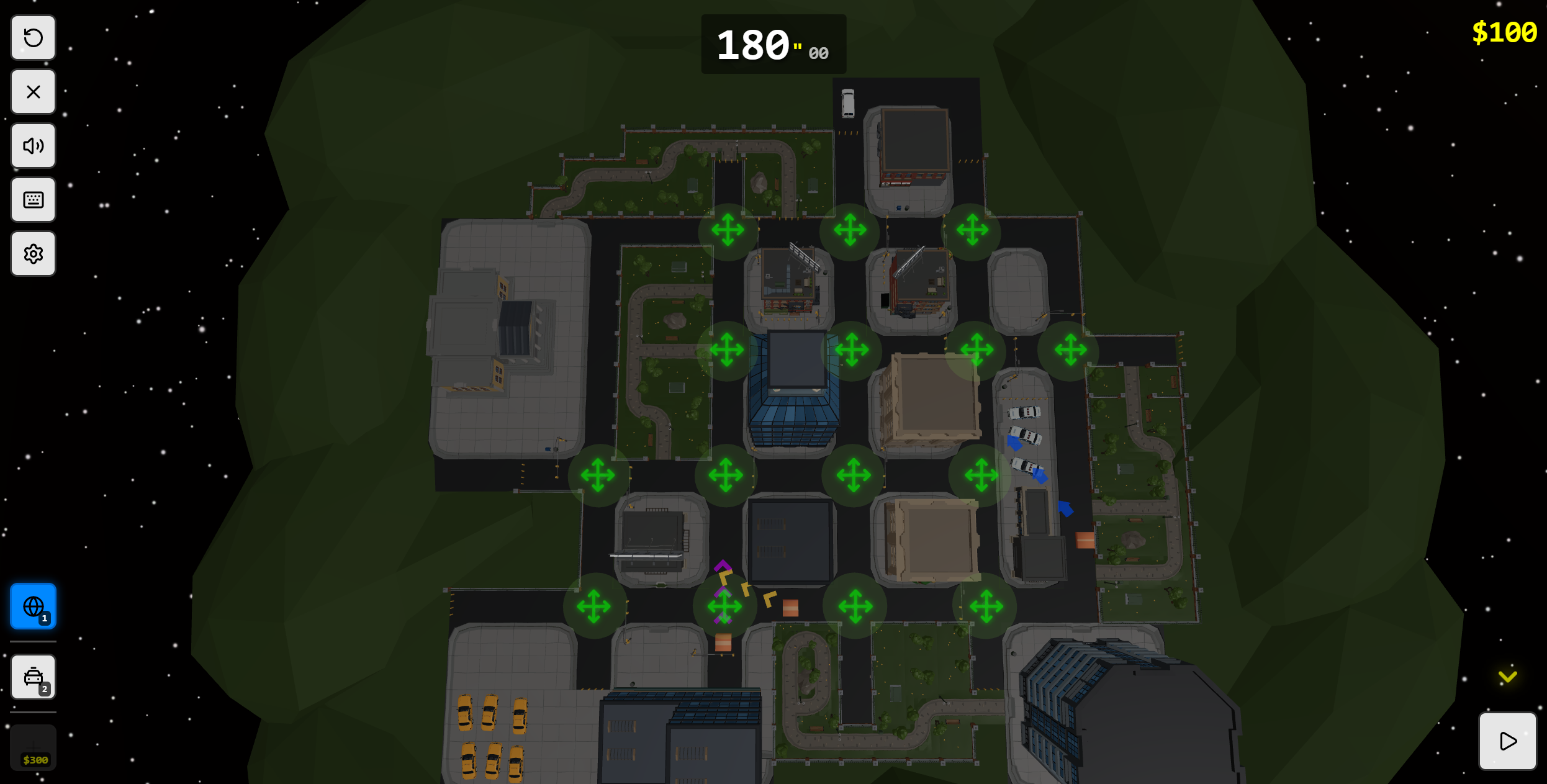
The multiplier system uses distance-weighted distribution — farther deliveries pay more but you risk running out of time. It added real decision-making to what was previously just "drive to the color."
Intro Scene & Tutorial (Jan 7-8)
Built a 2D intro scene and tutorial flow. The tutorial walks you through pickup and delivery mechanics with a step-by-step slider.
Then the interactable system happened. The intro scene had all these clickable 3D objects — a pizza, VR headsets, tutorial buttons — and each one needed hover animations, click handlers, and state management. It was 400 lines of spaghetti.
So I built a configuration-driven interactable system. Reduced per-object code from 200 lines to 10. Five animation types: hover, bobble, hover_bobble, spin, and GLB (for Blender-baked clips). The intro scene went from 400 lines to 100.
The Apartment (Jan 13-24)
This is where things got weird (good weird). Added a progression system with unlockable apartments and desks. Your apartment is the hub — you look around in 3D, click objects to start the game or access the shop.
Features that landed:
- Audio system — Web Audio API for sound effects, ambient city horns, a whip sound on the Play button (obviously)
- Progression shop — spend earnings on apartment upgrades and desk unlocks
- LookAround controls — scroll to zoom, pinch on mobile
- 3 desk levels with baked positions from Blender
- Performance pass — ripped out all the pointLights, replaced with emissive materials and circle mesh underglow
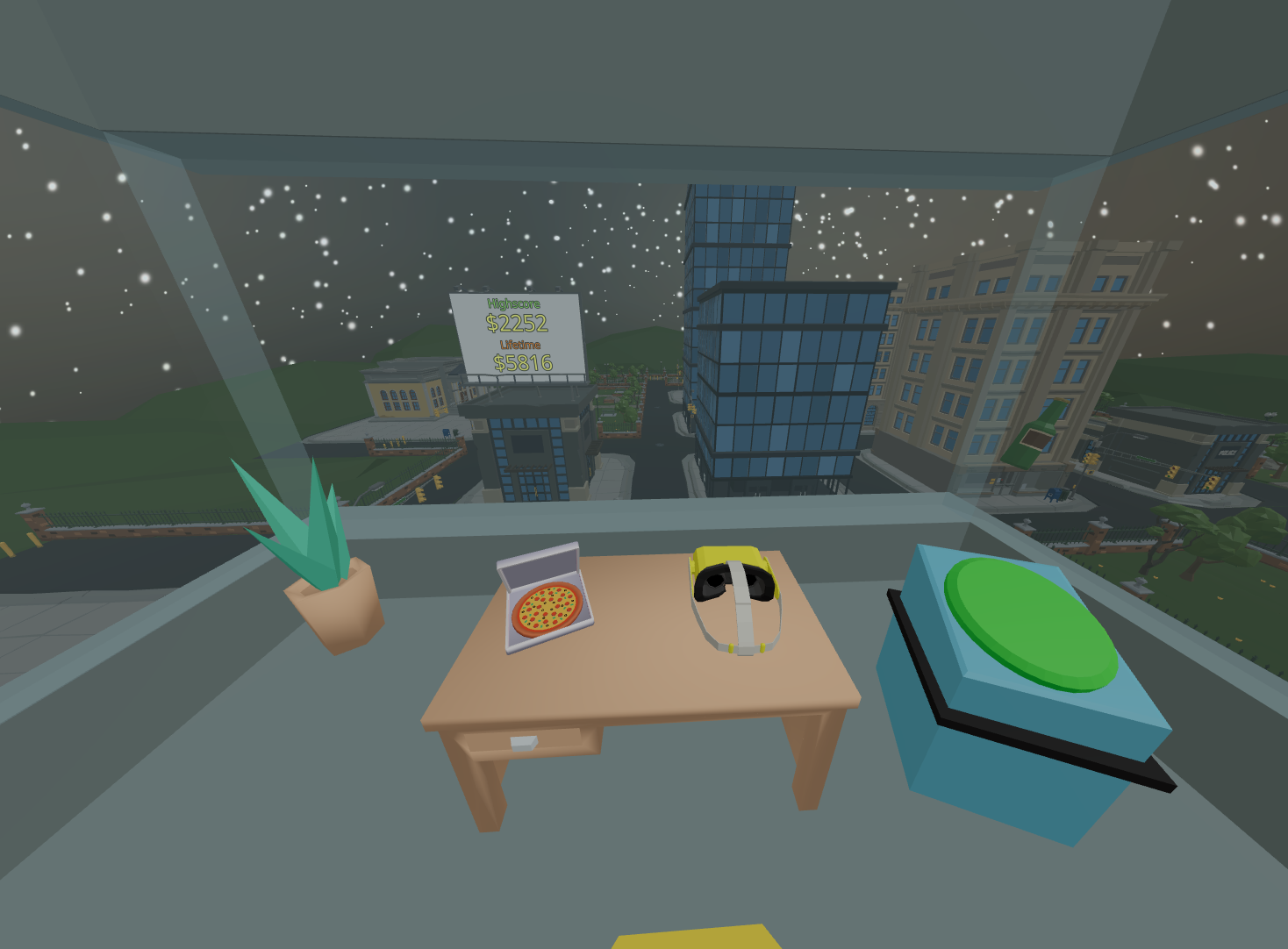
Also rebuilt the city model. New buildings, new layout, better textures. The commit message was "new city new me" which about sums it up.
Maxwell & Dialogue (Jan 27-28)
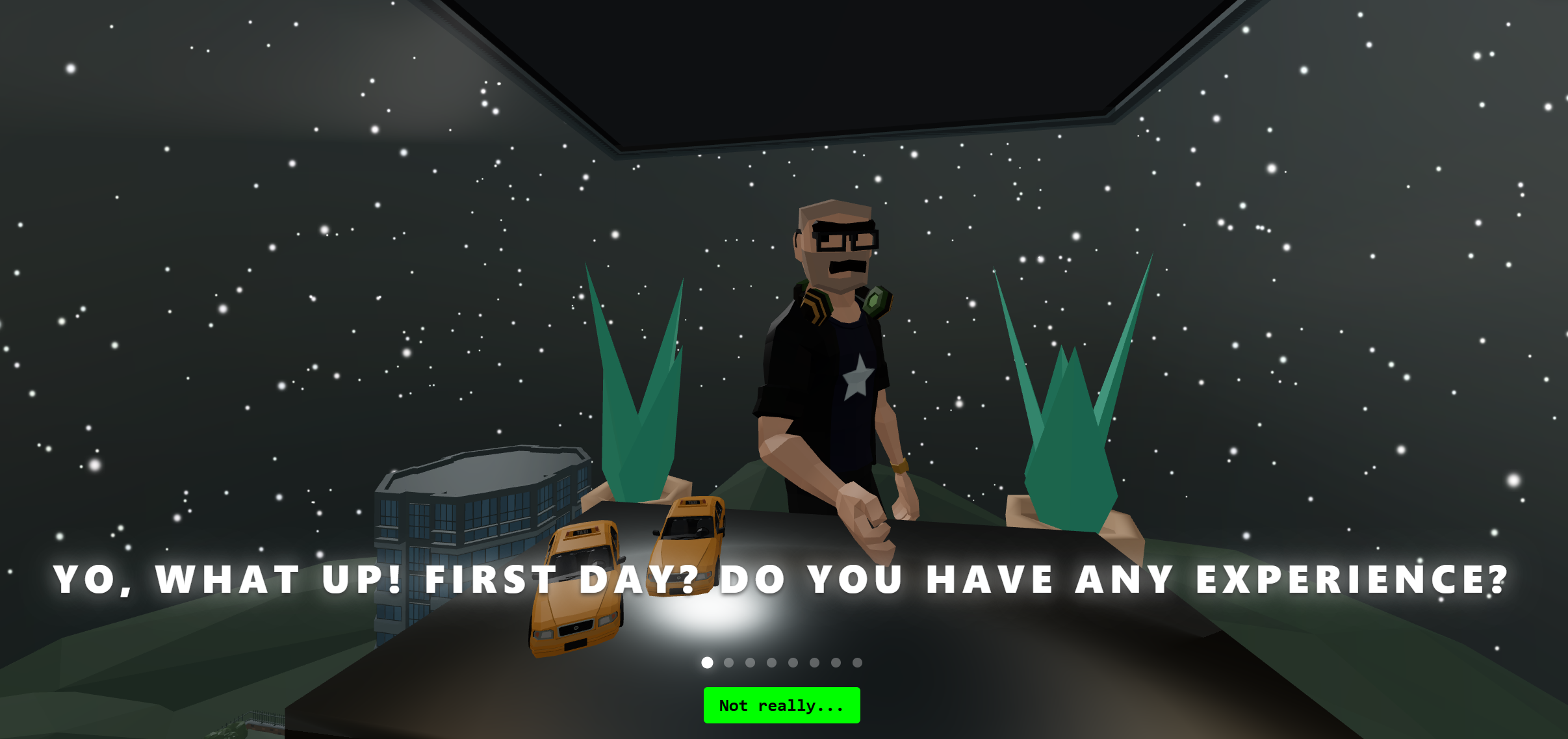
Added a character, ME! lol, with crossfade animation support and a cinematic dialogue system. Text overlays with custom button labels per step. This was the narrative layer the game was missing.
The tutorial got rebuilt too. Starts paused with a bouncing arrow on the play button. Dialogue steps guide you through the mechanics without a wall of text.
Current State
| System | Status |
|---|---|
| City model (Blender) | Working |
| Path-based movement | Working |
| Delivery system | Working |
| Score + multipliers | Working |
| Rush Hour mechanic | Working |
| Audio system | Working |
| Progression/shop | Working |
| Intro scene | Working |
| Tutorial | Working |
| Dialogue system | Working |
| Mobile support | Needs love |
| VR headset models | In progress |
What I Learned
Blender as level editor works. The path node system was the best architectural decision of the project. Designing roads and pickup zones visually instead of in code saved massive iteration time.
CSS Modules over inline styles, always. I waited too long to refactor and it hurt. Should have started there.
Configuration-driven systems scale. The interactable system refactor was a turning point. Going from "each object is a bespoke component" to "each object is a config entry" made adding content trivial.
Web Audio API is fine. I was dreading audio. It was fine. AudioManager with a few createBufferSource calls and you're done.
What's Next
- Polish the dialogue/narrative flow
- More city detail in Blender
- Leaderboard integration
- Possible Unity port (wrote docs for it already, we'll see)
Play It
The game is live at intervolz.com/crazytaxi. Still in active development.